Preventing Blindness from Retinal Diseases in Sub-Saharan Africa A Tele-Ophthalmology Project Starting in Tanzania

Where you live should not decide whether you go blind
In Europe or the United States, losing sight from diabetic retinopathy is often preventable.
In Africa, it can still mean a lifetime of darkness.
In Tanzania, thousands of people go blind every year—not because treatment doesn’t exist, but because it is almost inaccessible: retina specialists are scarce, advanced technology is unavailable. And for many patients, one missed appointment means irreversible vision loss.
By bringing cutting-edge retinal laser technology to Tanzania and connecting local doctors with top international specialists in real time, we are turning global expertise into local care. Patients receive world-class treatment without leaving their country. Doctors gain skills that last a lifetime.
Table of Contents
Project Overview
Preventable blindness remains one of the most overlooked global health inequalities. In sub-Saharan Africa, thousands of people lose their sight every year due to retinal diseases that are routinely treatable in high-income countries. Tanzania, a country of over 68 million people, has only a handful of retina-trained specialists serving the public health system. As diabetes and hypertension rise rapidly, so does the burden of diabetic retinopathy and retinal vascular diseases—now among the leading causes of irreversible blindness in the region.
This project introduces a new model of care: combining advanced navigated retinal laser technology, remote expert guidance, and hands-on mentorship to deliver world-class retinal treatments directly in Tanzania. By installing a navigated retinal laser at Muhimbili National Hospital in Dar es Salaam and connecting Tanzanian ophthalmologists with retina specialists in Europe and the United States, we aim to prevent blindness, transfer high-level know-how, and build sustainable local capacity.
Over two years, this initiative will treat hundreds of patients, train a new generation of African ophthalmologists, and create a replicable tele-ophthalmology model for sub-Saharan Africa.
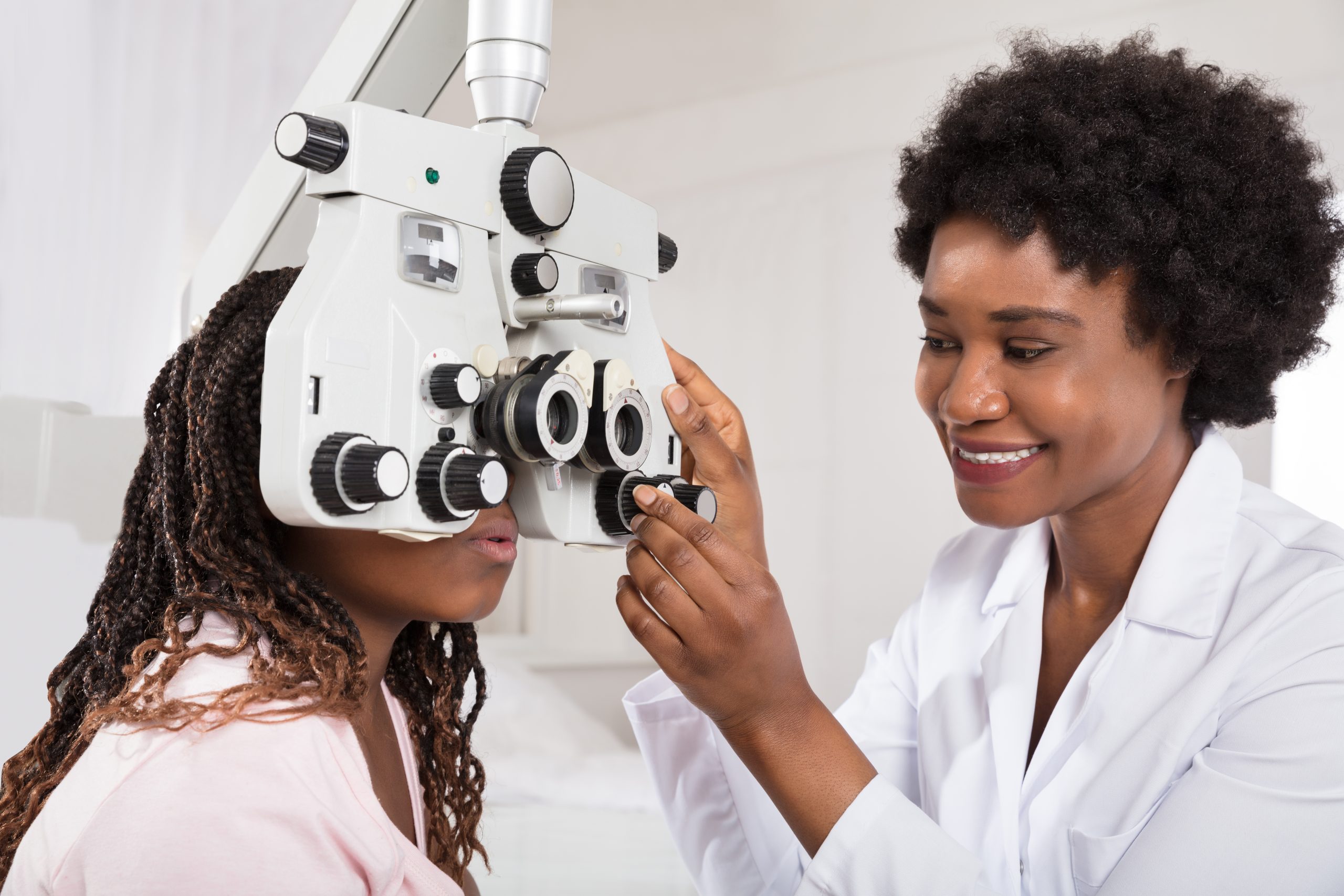
Table of Contents
The Problem
Sub-Saharan Africa bears one of the highest burdens of preventable blindness worldwide. In East Africa, up to 28% of adults with diabetes are affected by diabetic retinopathy, a condition that can silently progress to blindness if not treated in time. In Tanzania, many patients are diagnosed only when the disease is already advanced.
Access to retinal care is extremely limited. Retina fellowship programs are almost non-existent, and advanced technologies such as navigated retinal lasers are unavailable in public hospitals. For many patients, especially those living far from urban centers, follow-up visits are difficult or impossible. In these settings, laser therapy is often the most effective and sustainable treatment, as it can preserve vision in a single session, unlike repeated intravitreal injections that require strict follow-up.
Without intervention, thousands of working-age adults risk losing their sight—often resulting in loss of income, social isolation, and long-term dependency.
The Solution: Tele-Ophthalmology and Navigated Laser Therapy
Our project addresses this gap through an innovative hybrid model of care that integrates technology, training, and international collaboration.
At the heart of the initiative is the installation of a state-of-the-art navigated retinal laser at Muhimbili National Hospital, Tanzania’s main public referral center. Unlike conventional lasers, navigated laser technology allows precise treatment planning and execution, improving safety and outcomes while reducing operator dependency.
What makes this project unique is the remote mentorship component. Retina specialists based in Europe and the United States can:
- design laser treatment plans remotely,
- guide Tanzanian ophthalmologists in real time during procedures,
- provide continuous case discussions and feedback.
This model has already been validated in a peer-reviewed international study published in Therapeutic Advances in Ophthalmology (2025), demonstrating that remote navigated laser treatments across continents are feasible, safe, and effective.
By combining on-site care with transcontinental expertise, patients receive world-class treatment without leaving their country, while local doctors retain full ownership of patient care.
Impact and Expected Results
Over the two-year project period, we expect to achieve the following results:
The impact goes far beyond individual patients. Preventing blindness preserves independence, productivity, and dignity, with ripple effects on families and entire communities.
- more than 500 patients with diabetic retinopathy or retinal vascular diseases treated, directly preventing blindness,
- at least 10 Tanzanian ophthalmologists trained in advanced retinal diagnostics and laser therapy,
- two local doctors prepared as future trainers, ensuring long-term sustainability,
- a fully operational tele-ophthalmology platform connecting Tanzania with Europe and the United States,
- clinical outcomes comparable to international standards, with high patient satisfaction and safety.
Why Tanzania
Tanzania was selected as the pilot country based on several strategic factors:
- a high and growing burden of diabetic retinopathy,
- the presence of Muhimbili National Hospital, a national referral center with strong academic and clinical capacity,
- existing collaborations with Tanzanian ophthalmologists and university partners,
- government interest in scalable, cost-effective solutions for non-communicable diseases.
By starting in Tanzania, we can establish a strong regional hub capable of expanding this model to other African countries in the future.
Why Macula & Genoma Foundation
The Macula & Genoma Foundation is a non-profit organization dedicated to advancing retinal care through innovation, research, and education. The Foundation has a strong track record in:
The Foundation’s leadership has pioneered the use of remote navigated laser therapy, publishing internationally recognized clinical evidence. This project represents the natural extension of that expertise into global health and capacity building, with the goal of reducing avoidable blindness where the need is greatest.
- retinal disease research,
- development and validation of innovative treatment models,
- international scientific collaborations with universities in Europe and the United States.
A Sustainable and Replicable Model
Sustainability is built into every aspect of the project:
Tanzania will serve as a proof-of-concept hub, paving the way for replication across sub-Saharan Africa.
- equipment and training are embedded within a public hospital, ensuring institutional ownership,
- local ophthalmologists and biomedical technicians are trained to operate and maintain the technology,
- a train-the-trainer approach enables expansion without permanent dependence on foreign specialists,
- clinical, economic, and cultural data will guide integration into national eye health strategies.